
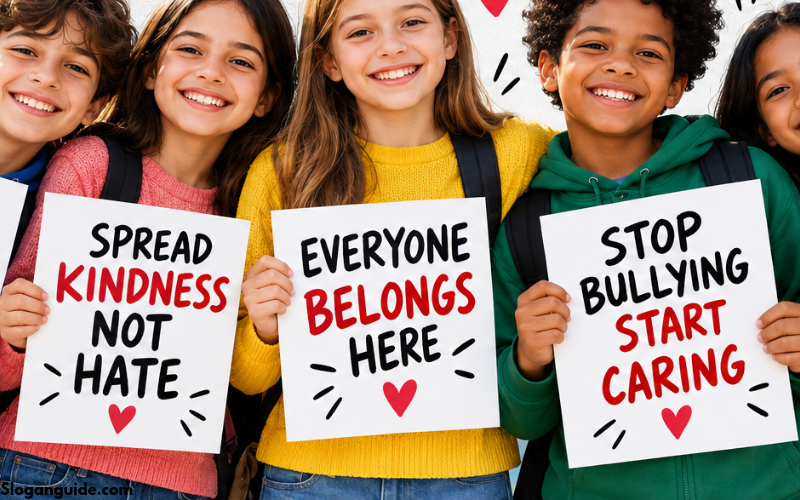
A few powerful words can make someone stop, think and choose to treat others better. Anti-bullying slogans help spread this message in a simple way. They remind people that kindness matters, everyone deserves respect, and nobody should feel afraid to be themselves.
Whether you are preparing a school poster, planning an awareness campaign, organising an anti-bullying event or creating a social media post, the right slogan can make your message easier to remember. A short line can sometimes communicate an idea more clearly than a long speech.
Every choice has a consequence. A hurtful comment can leave someone feeling alone, while a kind word can make their day better. The future of a safer community starts with the choices people make today. These slogans are designed to encourage positive actions, support those who experience bullying and remind everyone that standing together makes a difference.
Short Anti-Bullying Slogans That Say More With Fewer Words
Sometimes, the shortest messages are the easiest to remember. A good short slogan should be clear, meaningful and strong enough to catch someone’s attention in just a few seconds.
These short anti-bullying slogans work well when you have limited space on a school noticeboard, classroom wall, badge, sticker or social media graphic.
- Kindness Is Always Stronger.
- Stop Bullying, Start Caring.
- Choose Respect Every Day.
- Different Is Not Wrong.
- Make Kindness Your Habit.
- Words Can Heal, Not Hurt.
- Stand Together, Stay Strong.
- Be Brave, Be Kind.
- No Room for Bullying.
- Respect Makes Us Better.
- Speak Up, Stand Tall.
- Spread Smiles, Not Fear.
- Every Voice Deserves Respect.
- Be a Friend, Not a Bully.
- Let Kindness Lead.
- Strong Hearts Never Hurt.
- Bullying Stops With Us.
- Make Peace Your Power.
- Everyone Belongs Here.
- Be Proud, Be Respectful.
- Build People Up, Never Down.
- Kind Words Change Everything.
Where to use these slogans: Short messages are especially useful when people need to understand the message quickly. Put one slogan in large letters at the centre of a poster and keep the background simple. You can also print different slogans on classroom stickers or student badges. For social media, pair a short line with a meaningful image so the message feels personal rather than like another ordinary announcement.
Related Post: 120+ Funny Pickle Slogans: Hilarious Ideas for Every Pickle Lover
Awareness and Campaign Messages Against Bullying
An anti-bullying campaign needs more than a catchy headline. It should encourage people to recognise harmful behaviour, Knowing its effect on others and take responsibility for creating a respectful environment.
The following bullying slogans are suitable for awareness weeks, community events, school assemblies, public displays and educational campaigns.
- A Safer Community Begins With Respect.
- Don’t Let Silence Protect Bullying.
- Raise Your Voice Against Hurtful Actions.
- Every Child Deserves a Safe Place to Learn.
- Make Awareness the Beginning of Change.
- Bullying Has No Place in Our Community.
- Notice the Hurt Behind the Smile.
- Speak Against Cruelty, Stand for Humanity.
- Together We Can Change the Story.
- Respect Every Person, Every Day.
- One Strong Voice Can Inspire Many.
- Don’t Watch Someone Suffer in Silence.
- A Better School Starts With Better Choices.
- Take a Stand Before Someone Falls.
- Awareness Today, Kindness Tomorrow.
- End the Cycle, Start a Culture of Care.
- Your Actions Shape Someone’s Tomorrow.
- Make Every Classroom a Place of Respect.
- Stop Hurtful Behaviour Before It Spreads.
- Bullying Is a Choice, Respect Is Too.
- A Kinder Community Is Everyone’s Responsibility.
- Don’t Be Part of the Problem; Be Part of the Change.
Where to use these slogans: Campaign slogans should communicate a clear purpose and encourage people to take action. They work particularly well on awareness banners, event invitations, information boards and community newsletters. You can choose one central message for the entire campaign and use supporting slogans across different materials. For example, a campaign called “Respect Starts Here” could feature messages about friendship, speaking up, inclusion and responsible behaviour.
A good awareness campaign should also explain what people can do when they witness bullying. Encourage students and community members to seek help from a trusted adult, teacher or appropriate support person rather than expecting someone to handle the situation alone.
Anti-Bullying Slogans for Schools, Teachers and Students
Schools should be places where students feel welcome, respected and comfortable learning. Unfortunately, bullying can make an ordinary school day difficult for someone who experiences it.
A school slogan should be easy for young students to knowing while still giving older students something meaningful to think about. These ideas focus on friendship, classroom respect, inclusion and the responsibility to help one another.
- Our School, Our Rules: Respect Everyone.
- Make Friendship Louder Than Bullying.
- Every Student Deserves a Happy School Day.
- Classmates Today, Supporters Forever.
- No One Should Walk Alone.
- Be the Reason Someone Feels Welcome.
- Respect Is the Best Classroom Rule.
- Don’t Make Someone’s School Day Harder.
- Different Students, One Respectful School.
- A Good Friend Never Makes Others Feel Small.
- Let Every Student Shine.
- Stop Teasing, Start Including.
- Our Class Is Stronger Without Bullying.
- Be the Change in Your School.
- School Is for Learning, Not Hurting.
- Make Every Desk a Place of Belonging.
- Include Someone New Today.
- Real Friends Never Enjoy Someone’s Pain.
- Speak Kindly in Every Classroom.
- We Learn Better When We Respect Each Other.
- No Laughing at Someone’s Differences.
- Make Your School a Bully-Free Zone.
Where to use these slogans: Teachers can display these messages outside classrooms, in hallways, near the library or on school noticeboards. Students can use them for art competitions, classroom presentations and anti-bullying projects. Another useful idea is to let students choose a slogan and explain what it means in their own words. This gives them a chance to think about how their behaviour affects classmates.
For younger children, choose simple phrases such as “Be a Friend, Not a Bully.” For teenagers, a message like “Your Character Shows in How You Treat Others” may feel more meaningful. Teachers can also use these slogans as discussion starters during classroom activities.
Related Post: Law Slogans: Words That Stand for Justice and Fairness
Slogans About Making Better Choices and Treating Others Well
Everyone makes choices throughout the day. Some choices bring people closer, while others create distance and hurt feelings. The way we speak, behave and respond to differences can shape the environment around us.
These slogans focus on personal responsibility. They encourage students and adults to think before speaking, choose empathy and understand that being popular or powerful does not give anyone the right to mistreat another person.
- Choose Kindness Before You Choose Words.
- Your Character Is Your Real Strength.
- Think Before You Speak, Care Before You Act.
- Make Respect Your First Reaction.
- Good Choices Create Better Friendships.
- Be the Person You Would Want Beside You.
- Lift Someone Up Instead of Pushing Them Down.
- Choose Understanding Over Judgement.
- A Kind Heart Is Never Weak.
- Your Words Reveal Your Values.
- Make Someone Feel Included Today.
- Don’t Trade Someone’s Happiness for a Laugh.
- Real Confidence Never Needs Cruelty.
- Be Better Than the Hurtful Words You Hear.
- Respect Is a Choice Worth Making.
- Give Others the Kindness You Expect.
- Let Your Actions Speak With Care.
- Make Your Influence a Positive One.
- Choose to Help, Not Humiliate.
- Small Acts of Respect Build Strong Friendships.
- Your Next Choice Can Make Things Better.
- Leave Every Person With a Little More Hope.
Where to use these slogans: These messages are ideal for character-building activities, motivational classroom displays, student leadership programmes and school newsletters. They also work well in presentations about personal responsibility and respectful communication. You can ask students to select one slogan and describe a real situation in which they could put its message into practice.
One effective activity is to place a slogan near the classroom entrance and change it every week. This keeps the message fresh and gives students a regular reminder to think about their choices. Teachers can also invite students to write their own examples of kindness and respect.
Recovery, Support and Hope Messages for Bullying Survivors
Bullying can leave someone feeling isolated, embarrassed or unsure about themselves. A supportive message cannot fix every problem, but it can remind someone that they are not defined by another person’s behaviour.
These slogans focus on encouragement, confidence, belonging and hope. They are written to support people who have experienced bullying without placing pressure on them to forgive, confront or quickly move past what happened.
- Your Story Is Bigger Than Their Words.
- You Deserve Respect Without Conditions.
- You Are More Than Someone’s Opinion.
- Keep Your Light, Even on Difficult Days.
- Your Differences Make You Valuable.
- You Are Never Alone in This Fight.
- Healing Begins With Being Heard.
- Your Voice Matters, Always.
- Don’t Let Cruelty Define Your Worth.
- You Deserve Friends Who Celebrate You.
- There Is Strength in Asking for Help.
- Your Future Is Not Written by Bullies.
- You Belong Just as You Are.
- One Difficult Day Does Not Define Your Life.
- Keep Being Yourself Without Apology.
- You Deserve a Safe Place to Grow.
- Your Confidence Can Rise Again.
- Being Different Is Nothing to Hide.
- There Is Hope Beyond Hurtful Moments.
- You Matter More Than Their Judgement.
- Let Support Replace Silence.
- You Have Every Right to Feel Safe.
Where to use these slogans: Supportive slogans are suitable for student support spaces, counselling room displays, school wellbeing events and awareness materials. They can also be shared on social media to remind people that someone experiencing bullying deserves understanding rather than judgement.
When using these messages, avoid making someone feel responsible for fixing the situation themselves. A person who is being bullied may need help from teachers, parents, counsellors or another trusted adult. A supportive slogan should open the door to conversation, not replace the support someone needs.
A particularly meaningful idea is to create a school wall called “Words That Support Us.” Students can contribute encouraging messages that celebrate individual differences and remind classmates that asking for help is a positive step.
Modern and Catchy Slogans That Make People Think
Modern slogans need to feel natural, memorable and easy to share. They should connect with the way people communicate today without turning a serious subject into a joke.
These catchy ideas are suitable for digital posters, school social media pages, student campaigns, event banners and short awareness videos. Some use a playful rhythm, while others take a more direct approach.
- Kindness Is the New Cool.
- Be a Vibe That Makes People Feel Safe.
- No Likes for Bullying.
- Real Ones Respect Everyone.
- Don’t Trend With Hate.
- Keep It Kind, Keep It Real.
- Make Respect Go Viral.
- Good Energy, Zero Bullying.
- Your Words Have a Real-Life Impact.
- Cool People Don’t Put Others Down.
- More Kindness, Less Drama.
- Be Famous for Your Good Heart.
- Don’t Follow Hate, Lead With Respect.
- Better Chats, Better Choices.
- Make Your Group a Safe Space.
- Bullying Is Out, Respect Is In.
- Be the Good News in Someone’s Feed.
- Real Strength Has Nothing to Prove.
- Share Support, Not Cruelty.
- No Room for Hate in Our Feed.
- Respect Is Always in Style.
- Make Kindness Your Signature Move.
Where to use these slogans: These messages are useful for students who want to make anti-bullying content that feels relevant to their generation. They can appear in Instagram graphics, school TikTok awareness videos, digital noticeboards and student-led online campaigns. Pair each slogan with a short caption that explains its message instead of relying on hashtags alone.
For example, “Make Respect Go Viral” could be the main line of a social media campaign. Students could share one small example of kindness each day and encourage their friends to do the same. This makes the campaign interactive and gives people something positive to participate in.
How to Create an Anti-Bullying Slogan of Your Own
Writing your own slogan is a great way to make an awareness message feel personal. You do not need complicated words or a clever rhyme. You need a clear idea, an audience and a short line that people can remember.
Follow these seven steps to create a slogan that communicates your message effectively.
Step 1: Decide What You Want People to Understand
Start with one clear purpose. Are you trying to encourage students to speak up, remind classmates to respect differences or support someone who has experienced bullying?
A slogan becomes confusing when it tries to communicate too many ideas at once. Choose one central message and build your words around it.
For example, if your goal is to encourage inclusion, you could write:
“Everyone Deserves a Place at Our Table.”
This message focuses on belonging rather than simply telling people what not to do.
Step 2: Think About the People Who Will Read It
A slogan for primary school students should sound different from one designed for teenagers or adults. Young children usually respond better to simple words and familiar examples.
Older students may prefer messages that discuss confidence, responsibility and social behaviour. Think about the audience before deciding on your wording.
For example:
“For Every Student, Respect Comes First.”
This line could work well on a secondary school noticeboard.
Step 3: Keep Your Main Message Short
A slogan should not read like a complete speech. Try to communicate your idea in a few words without losing its meaning.
Remove unnecessary details and focus on the strongest part of your message. If someone cannot understand it after reading it once, consider simplifying it.
For example:
“Stop the Hurt, Start the Help.”
This short line communicates both the problem and the positive action.
Step 4: Use Words That Create a Positive Feeling
A slogan can be firm without sounding aggressive. Words such as respect, courage, friendship, support, kindness and belonging can help create a message that people want to share.
Think about how the reader should feel after seeing your slogan. The goal is to encourage better behaviour, not embarrass or attack someone.
For example:
“Make Someone Feel Welcome Today.”
This gives the reader a simple action they can take immediately.
Step 5: Add a Little Rhythm or Contrast
Rhyming words and repeated sounds can make slogans easier to remember. However, a slogan does not need to rhyme to be effective.
You can also use contrast to make your message stronger. Compare a harmful action with a better alternative to create a line that catches attention.
For example:
“Replace the Teasing With Understanding.”
The contrast makes the message clear without making the wording complicated.
Step 6: Make Sure the Message Fits Its Purpose
Read your slogan and imagine it printed on a poster. Would someone understand it without needing a long explanation?
If you are preparing a school campaign, the slogan should fit the campaign’s main theme. If it is for a support poster, choose words that encourage people rather than making them feel uncomfortable.
For example:
“Speak Up for Those Who Need Support.”
This works well for a campaign encouraging students to become responsible bystanders.
Step 7: Test It Before Sharing
Show your slogan to a few people from your intended audience. Ask whether they understand it and whether they can remember it after reading it once.
Check spelling, punctuation and word choice before printing. You can also test different layouts to see which version is easiest to read from a distance.
For example:
“Together We Make School a Kinder Place.”
If students understand and remember the message, it may be a strong choice for your final poster.
Common Mistakes to Avoid When Creating Bullying Slogans
Even a meaningful message can lose its impact if it is poorly written or presented. Before using your slogan in a campaign, take a moment to check for these common mistakes.
1. Making the Message Too Complicated
Long slogans can be difficult to read on posters and banners. If a message contains too many ideas, people may lose interest before reaching the end.
Keep the main line short and move any extra explanation into a caption or supporting paragraph. Simple language usually makes the message easier to understand.
2. Using Words That Shame People
An anti-bullying message should discourage harmful behaviour without humiliating individuals. Insulting or labelling people can create another form of hurtful communication.
Focus on actions and better choices instead of attacking someone’s identity. The aim is to encourage responsibility and change.
3. Choosing a Slogan That Blames the Victim
Never suggest that someone experiencing bullying is responsible for the way another person treats them. Messages should not tell survivors to become tougher, ignore everything or simply fight back.
Instead, encourage support, safety and communication with trusted people. A slogan should make someone feel respected, not judged.
4. Making the Poster Difficult to Read
A powerful slogan will not help much if nobody can read it. Tiny lettering, busy backgrounds and too many colours can distract from the main message.
Use large, clear text and leave enough empty space around the words. Make sure the contrast between the text and background is strong.
5. Forgetting About the Intended Audience
A slogan designed for adults may not connect with younger children. Similarly, overly childish wording may not appeal to teenagers.
Choose language that matches the age group and setting. A little audience research can make your message more relevant.
6. Treating the Slogan as the Entire Solution
A poster cannot solve bullying on its own. Awareness messages are useful, but schools and communities also need clear ways to report harmful behaviour and support affected students.
Combine slogans with classroom discussions, staff guidance, student activities and accessible support systems. The message becomes more meaningful when people see positive actions behind it.
Related Post: Powerful Racism Slogans: to Promote Equality, Respect, and Unity
FAQs
1. What Are the Best Anti-Bullying Slogans?
Some effective anti-bullying slogans include “Be a Friend, Not a Bully,” “Kindness Is Always Stronger” and “Stop Bullying, Start Caring.” These messages are short and easy to understand. They encourage respect, friendship and positive behaviour. The best choice depends on your audience and the purpose of your campaign.
2. What Are Some Short Slogans to Stop Bullying?
Short slogans include “Choose Respect,” “Spread Smiles, Not Fear,” “Bullying Stops With Us” and “Let Kindness Lead.” These phrases are suitable for stickers, school badges, classroom walls and small posters. Their simple wording makes them easy to remember. Choose one that matches the message you want to communicate.
3. What Should I Write on Anti-Bullying Slogans Posters?
For anti bullying slogans posters, choose a clear headline such as “Everyone Belongs Here” or “Make Kindness Your Habit.” Use large lettering and a simple design so the message is easy to read. You can add a short supporting sentence explaining how students can help create a respectful school. Include information about where students can seek help when needed.
4. How Can I Write a Good Slogan About Bullying in School?
A good slogan about bullying in school should encourage students to respect classmates and include people who feel left out. Use familiar words and focus on one important message. For example, “Our Classroom Is Stronger When Everyone Belongs” is suitable for a school display. You can also invite students to create their own slogans as part of an awareness activity.
5. Why Are Anti-Bullying Campaign Slogans Important?
Anti-bullying campaign slogans help communicate important messages in a memorable way. They can encourage people to recognise harmful behaviour, support others and understand the value of respect. They also give schools and communities a shared message to use during awareness events. However, slogans work best when they are supported by real actions and appropriate help.
6. What Is a Good Bullying Slogan for Students?
“Be the Reason Someone Feels Welcome” is a good bullying slogan for students. It encourages classmates to think about how their behaviour affects other people. Another option is “Real Friends Never Put Others Down.” Both messages are simple enough for school posters and student presentations. They also encourage positive friendships without sounding overly strict.
7. How Can Students Help Stop Bullying?
Students can help by treating classmates with respect, refusing to join in with hurtful behaviour and supporting people who are being targeted. If they witness bullying, they can tell a teacher, school counsellor or another trusted adult. They should avoid putting themselves in danger by confronting an aggressive person. Small acts of support can help someone feel less isolated.
Conclusion
The right anti-bullying slogans can turn a simple poster into a reminder that every person deserves respect, safety and friendship. Whether you are preparing a school campaign, designing awareness materials or encouraging students to make better choices, choose words that inspire action rather than shame. A kinder environment does not come from slogans alone; it grows when people practise what those words teach. Start with one positive choice today, because the way we treat others helps shape the kind of community we create tomorrow.
Word count: 2,650+
Correct the slogan count everywhereRemove repeated explanation after each list