
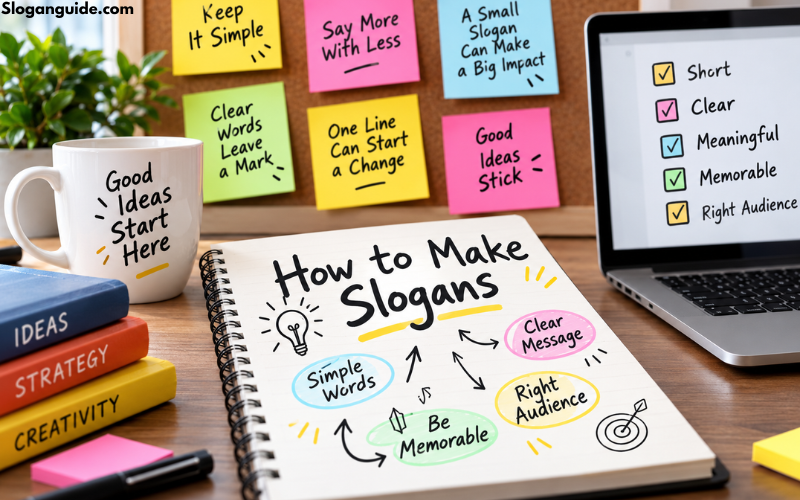
A good slogan can turn a simple idea into a line people remember. Whether you are creating a poster, planning a school event, promoting a campaign, or giving a message at a community gathering, a few well-chosen words can carry a lot of meaning.
The best slogans usually make the reader think, feel, choose, or act. A short line can remind someone that small choices can lead to different consequences, while the right message can point toward a better future.
Learning how to make slogans is less about finding fancy words and more about knowing what you want people to remember. Start with one clear idea, give it a strong voice, and remove anything that does not help the message.
Short Slogans With a Strong Message
Short slogans are often the easiest to remember because they do not ask people to read much. A strong short line can work on a poster, T-shirt, sticker, website banner, presentation slide, or social media graphic. The trick is to make every word earn its place.
Here are some original examples:
Choose Your Words, Shape Your Message
Make It Short. Make It Matter.
Small Words, Big Ideas.
Say More With Less.
Give Your Message a Voice.
One Line Can Start a Change.
Think First. Write Better.
Clear Words Leave a Mark.
Make Every Word Count.
Ideas Need Memorable Words.
Keep It Simple. Keep It Strong.
Write Less. Mean More.
A Good Message Sticks.
Turn Thoughts Into Words.
Make Your Point Memorable.
Strong Ideas Deserve Strong Lines.
Catch Attention. Keep Meaning.
Start With One Great Idea.
Short Words, Lasting Impact.
Create Words Worth Remembering.
A short slogan is especially useful when your audience will only see the message for a few seconds. Posters at busy events, signs in hallways, social media graphics, and promotional materials all benefit from quick wording.
Try reading the slogan aloud before using it. If you run out of breath, stumble over the wording, or forget it after a few seconds, it probably needs editing. A slogan does not have to be tiny, but it should feel easy to say and easy to recall.
Related Post: Powerful Slogans: That Make People Stop, Think, and Act
Awareness and Campaign Lines That Get Attention
Awareness slogans need a slightly different approach. They should communicate a serious idea without becoming too long or difficult to knowing. A campaign slogan may appear on a banner, classroom poster, social post, event card, or public display, so clarity matters more than cleverness.
Here are fresh examples:
Awareness Begins With One Conversation.
Know the Message. Share the Message.
Speak Up for Better Choices.
A Clear Message Can Open Eyes.
Think Beyond the Moment.
Awareness Starts With Paying Attention.
Learn More. Choose Wisely.
Good Information Leads to Better Decisions.
Make Room for Understanding.
Listen, Learn, and Take Action.
A Better Future Starts With Awareness.
Questions Can Lead to Change.
Spread Knowledge, Not Confusion.
See the Issue. Understand the Impact.
Start a Conversation That Matters.
Your Voice Can Carry a Message.
Awareness Is the First Step Forward.
Turn Attention Into Action.
Learn Today. Make Better Choices Tomorrow.
A Strong Campaign Starts With a Clear Idea.
Campaign slogans work best when they are focused on one purpose. If the campaign is about safety, keep the message centered on safety. If it is about education, avoid adding unrelated ideas just because they sound clever.
It also helps to match the emotional tone to the subject. A serious campaign may need calm and direct wording, while a community event can use a warmer line. Before publishing a slogan, ask whether someone who knows nothing about the campaign would understand its basic message.
Slogans for Schools, Classrooms, and Students
Schools are full of places where slogans can make a useful difference. A short line can fit on a classroom wall, student project, event banner, school newsletter, club poster, or presentation. Student slogans should feel encouraging rather than forced or overly formal.
Try these original lines:
Learn Something. Become Something.
Curiosity Makes Great Minds.
Every Question Can Teach You Something.
Read More. Imagine More.
Small Steps Build Big Skills.
Your Effort Matters.
Learn Today, Lead Tomorrow.
Mistakes Can Become Lessons.
Think Clearly. Speak Kindly.
Knowledge Gives Ideas Direction.
Be Curious, Not Afraid to Ask.
Good Habits Build Strong Futures.
Your Voice Has Value.
Learn Together. Grow Together.
Make Progress Your Goal.
A Better Grade Starts With Better Habits.
Stay Curious. Keep Growing.
School Is Where Ideas Take Shape.
Practice Today. Improve Tomorrow.
Bring Your Best Idea to the Room.
For schools and students, slogans should be easy enough for younger readers while still sounding natural to teenagers. A slogan that feels like a lecture is unlikely to connect with students.
Consider using slogans that support effort, curiosity, kindness, teamwork, reading, creativity, or personal growth. You can also invite students to create their own lines. That turns slogan writing into a practical writing exercise instead of simply decorating a wall.
Lines About Making Better Choices
Choice-based slogans are useful when the message is about responsibility, habits, personal growth, or thinking before acting. The strongest examples do not shame people. Instead, they remind readers that choices have results and that a different decision can lead to a different direction.
Here are some original options:
Choose What Moves You Forward.
Think First. Choose With Purpose.
Your Choices Shape Your Next Step.
A Better Choice Starts With a Pause.
Choose Progress Over Pressure.
Small Choices Build Big Results.
Think About Tomorrow Before Choosing Today.
Make Choices You Can Stand Behind.
Your Future Is Built One Choice at a Time.
Pause. Think. Decide.
Choose the Path That Helps You Grow.
Good Choices Start With Clear Thinking.
One Decision Can Change Your Direction.
Choose Strength Over Shortcuts.
Let Your Goals Guide Your Choices.
Make Today’s Choice Worth Tomorrow.
Choose What Matches Your Values.
Think About the Result, Not Just the Moment.
Better Decisions Begin With Better Questions.
Choose a Future You Want to See.
These slogans can be used for school programs, youth campaigns, personal development posters, workplace messages, and community projects. They work best when paired with a clear visual or short supporting sentence.
Avoid making the message sound like a command from someone standing above the reader. A line such as “Pause. Think. Decide.” gives the audience room to consider the idea for themselves. That small difference can make a slogan feel more respectful and useful.
Related Post: 125+ Notary Slogans for a Trusted and Professional Business
Recovery, Hope, and Fresh Starts
Messages about recovery and hope require care. The language should offer encouragement without judging anyone’s past or making unrealistic promises. A slogan can remind someone that change can begin with one step, one conversation, or one decision.
Here are original examples:
A New Step Can Begin Today.
Hope Gives Tomorrow a Direction.
Your Story Can Take a New Turn.
One Step Forward Still Counts.
Fresh Starts Begin With Brave Choices.
Keep Going, One Day at a Time.
There Is Strength in Starting Again.
Your Next Chapter Is Still Yours to Write.
Progress Does Not Need to Be Perfect.
Choose Hope for the Next Step.
A Better Direction Can Start Small.
Every Step Forward Has Meaning.
Start Again Without Shame.
Let Hope Lead the Way.
Tomorrow Gives You Another Chance to Grow.
You Are More Than One Difficult Chapter.
Keep Moving Toward Better Days.
Change Can Begin With One Honest Step.
New Choices Can Create New Directions.
There Is Courage in Beginning Again.
These lines can work on support-group materials, awareness posters, community events, personal journals, social media graphics, and inspirational campaigns. They should be used alongside responsible messaging rather than as promises that a single action will solve a person’s problems.
When creating a slogan about recovery, think about the emotion you want to leave behind. Hope, patience, courage, dignity, and forward movement are usually safer foundations than guilt or fear. The goal is to encourage without pretending that change is always easy.
Modern, Catchy Slogans for a Younger Audience
Modern slogans often use rhythm, contrast, wordplay, or a conversational style. They can be especially effective on social media, event posters, student projects, startup campaigns, clubs, and digital advertising.
Here are fresh examples:
Think It. Say It. Make It Stick.
Good Ideas Need Good Lines.
Your Message, Your Moment.
Keep It Real. Keep It Memorable.
Less Noise. More Meaning.
Make the Message Pop.
Say Something People Remember.
Big Idea. Small Line.
Turn Attention Into Interest.
Give Your Words Some Energy.
Fresh Ideas Need Fresh Words.
Make Them Stop. Make Them Think.
Simple Can Still Be Powerful.
Your Best Line Might Be Your Shortest.
Make Words Work Harder.
Catch the Eye. Keep the Meaning.
Write Bold. Stay Clear.
A Little Wit Goes a Long Way.
Make Your Message Sound Like You.
Create a Line That Lives Beyond the Poster.
Catchy does not mean meaningless. A slogan can have personality while still communicating something useful. Rhyming can help, but forced rhyme can make a line sound childish, so use it only when it feels natural.
Modern slogans also benefit from conversational language. Imagine someone saying the line to a friend. If it sounds stiff when spoken aloud, change it. A memorable slogan often feels less like an advertisement and more like a thought someone wishes they had said first.
How to Build Your Own Slogan From Scratch
Knowing how to make slogans becomes much easier when you stop trying to write the perfect line immediately. Start with the message, then shape the words. These seven steps can help you move from a rough idea to a usable slogan.
1. Decide What You Want People to Remember
Start with one central idea. Do not begin by searching for rhymes or clever phrases. Ask yourself what the audience should understand after seeing your slogan.
Write the answer in one plain sentence first.
For example: “I want students to understand that regular reading can improve their knowledge and imagination.”
That sentence is not a slogan yet, and that is fine. It gives you something solid to work with.
2. Know Who Will Read It
A slogan for children will sound different from one written for business owners, athletes, parents, or community members. Think about the audience’s age, interests, concerns, and the place where they will see the line.
For a student reading campaign, you might start with:
“Reading helps you discover new ideas.”
Then simplify and sharpen it into:
“Read More. Discover More.”
The second version is easier to remember and has a stronger rhythm.
3. Choose the Main Emotion
Decide what feeling should sit behind the message. You might want people to feel hopeful, confident, curious, motivated, responsible, excited, or thoughtful.
Do not try to create every emotion at once.
For a positive campaign, you could begin with:
“We want people to feel confident about making better choices.”
A slogan based on that idea might become:
“Choose With Confidence.”
The emotional goal helps guide the wording.
4. Create Several Rough Versions
Do not settle on the first line that comes to mind. Write at least ten rough options, even if some are terrible. The point is to create raw material.
Suppose your message is about learning from mistakes. Your rough ideas might include:
“Mistakes Teach.”
“Learn From Every Miss.”
“Turn Mistakes Into Lessons.”
“Every Mistake Can Teach.”
After comparing them, “Turn Mistakes Into Lessons” may feel strongest because it clearly shows the transformation.
5. Add Rhythm or Contrast
Once the basic idea is clear, experiment with sound. Short sentences, repeated structures, contrast, and rhythm can make a slogan easier to remember.
For example:
“Think Less. Learn More.”
“Start Small. Grow Strong.”
“Read Today. Lead Tomorrow.”
The goal is not to force a rhyme. You are looking for a natural pattern that makes the line pleasant to read and say.
6. Cut Unnecessary Words
This is where many decent slogans become strong ones. Look at every word and ask whether the sentence still works without it.
For example:
“Make sure that you always choose the path that can help you move forward.”
That is too long for a slogan.
A cleaner version is:
“Choose the Path Forward.”
The second line delivers the same basic thought with much less effort from the reader.
7. Say It Out Loud and Test It
A slogan can look good on a screen but sound awkward when spoken. Read it several times. Ask someone else to repeat it after hearing it once.
For example, if your slogan is:
“Create Words People Will Remember.”
Say it naturally. If people can repeat the line without seeing it again, you may have something useful.
Also check spelling, double meanings, tone, and context before publishing. A slogan may seem harmless to its creator but mean something different to another audience.
Common Slogan-Writing Mistakes to Avoid
1. Trying to Say Everything at Once
A slogan cannot explain an entire campaign, product, event, or idea. Trying to include every detail usually creates a long sentence instead of a memorable line.
Choose the single message that matters most. Put supporting information elsewhere on the poster, website, or campaign material.
2. Using Complicated Language
Big words do not automatically make a slogan sound professional. In many cases, simple language is easier to remember and easier for a wider audience to understand.
Replace complicated terms with everyday words whenever possible. Read the line from the perspective of someone seeing it for the first time.
3. Forcing Rhymes
Rhyming can make a slogan catchy, but a weak rhyme can make the whole line sound awkward. Never change the meaning of your message just to make two words rhyme.
If the rhyme feels unnatural when you say it aloud, remove it. Clear meaning should come first.
4. Copying Familiar Famous Slogans
A famous slogan may give you an idea about structure or rhythm, but copying its wording is a poor strategy. It can make your work feel unoriginal and may create branding problems.
Study why successful slogans work instead. Then build something from your own message, audience, and voice.
5. Making the Line Too Generic
Words such as “Be Better,” “Do Your Best,” or “Make a Difference” can sound positive, but they are so broad that they may not tell the audience much.
Give the line a specific idea or angle. A more focused slogan has a better chance of standing out.
6. Forgetting to Test the Slogan
Writing the slogan is only part of the job. Test it with real readers before putting it on hundreds of posters or publishing it across social media.
Ask whether they understand the message, remember the wording, and know what the slogan is connected to. Their answers can reveal problems you did not notice yourself.
Related Post: 150+ Best Circus Slogans That Bring the Big Top to Life
FAQs
Q1. How to make slogans that are easy to remember?
Start with one clear idea and use simple words. Short phrases, rhythm, repetition, contrast, and natural language can all help. Read the slogan aloud and remove unnecessary words until the line feels smooth and easy to repeat.
Q2. How long should a good slogan be?
There is no fixed word count, but shorter is usually better when the slogan must be remembered quickly. A line of three to eight words can work very well, although longer slogans can succeed when the wording has a strong rhythm. The real test is whether people can understand and recall it easily.
Q3. What makes a slogan catchy?
A catchy slogan often combines a clear message with rhythm, contrast, repetition, humor, or an unexpected turn of phrase. It should still make sense without needing a long explanation. Catchiness is useful, but the slogan should never sacrifice meaning just to sound clever.
Q4. Can I use rhyming words when creating a slogan?
Yes, rhyming can make a slogan memorable, especially for school campaigns, community events, and playful promotions. However, the rhyme should sound natural rather than forced. If the wording becomes confusing just to create a rhyme, use a stronger non-rhyming line instead.
Q5. How do I make a slogan for a school project?
First decide what the project is trying to communicate. Then identify the audience and choose simple words that students can understand quickly. Write several versions, remove unnecessary wording, and choose the one that communicates the idea most clearly.
Q6. Should a slogan explain the entire campaign?
No. A slogan should usually express the central idea rather than provide every detail. Think of it as the memorable headline for the larger message. Supporting information can appear underneath it or in other campaign materials.
Q7. What is the best way to improve a slogan?
Write several versions instead of protecting the first idea you create. Read each one aloud, compare their clarity, and ask other people what they think the line means. The strongest version is usually the one that communicates the main idea quickly without needing extra explanation.
Conclusion
Learning how to make slogans starts with one simple idea: say something meaningful in fewer words. A strong slogan should be easy to understand, easy to remember, and suited to the people who will see it. Whether you are writing for a school, business, campaign, event, or social media post, focus on one clear message and give it a natural rhythm.
Write several options, remove unnecessary words, and test the best ones out loud. The right slogan can turn an ordinary message into something people remember long after they have seen it.